Understanding Meersburg’s Dual Topography
Before reserving a hotel in Meersburg, travelers must understand its vertical geography. The town is divided into two distinct levels: the Lower Town (Unterstadt) resting at lake level, and the Upper Town (Oberstadt) perched atop a sandstone bluff approximately 40 vertical meters higher. The two sectors are connected by steep cobblestone stairs (such as the Steigstraße) and narrow ramps.
Hotels in the Lower Town place you directly along the promenade, within footsteps of the passenger ferry harbor, waterfront cafes, and the ferry terminal. Upper Town hotels, clustered around the 7th-century Old Castle (Burg Meersburg) and the pink Baroque New Palace (Neues Schloss), offer commanding, sun-drenched views across the open water toward Mainau Island and Constance.
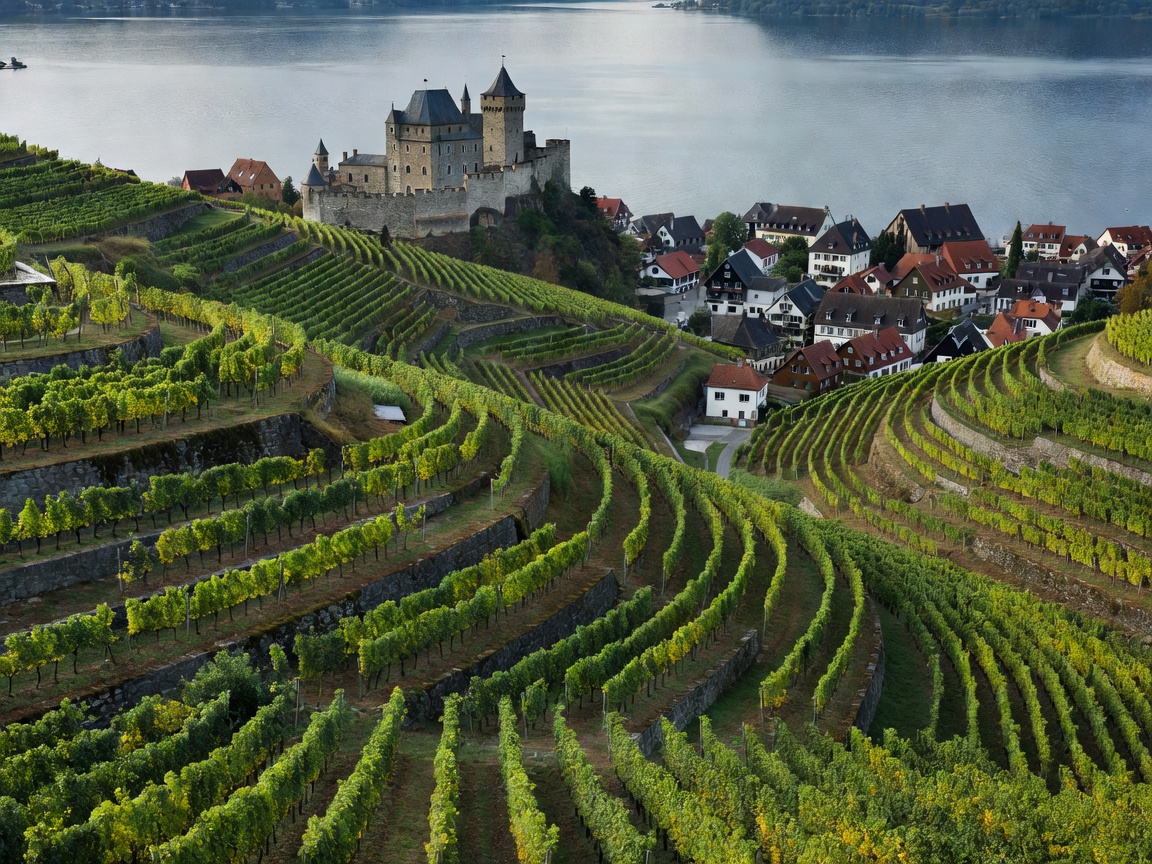
Vineyard Guesthouses and Estate Stays
Meersburg has cultivated wine since the Roman era. The unique microclimate created by Lake Constance—acting as a thermal reservoir that mitigates sharp temperature drops—allows Spätburgunder (Pinot Noir) and Müller-Thurgau grapes to thrive on steep gradient plots.
Several family-operated wineries on the town perimeter run seasonal boutique guesthouses (Weingüter mit Gästezimmern). Staying at a vineyard estate allows travelers to escape daytime crowds, sample estate-bottled wines in quiet courtyard tasting rooms, and take early morning walks through quiet vine rows before the sun warms the lake breeze.
Pros of Choosing Meersburg
- Constant car-ferry (Autofähre) link to Konstanz-Staad running 24 hours daily.
- Exceptional regional culinary scene featuring Baden wine taverns (Besenwirtschaften).
- Incomparable historic architecture and elevated lake panoramas.
- Tranquil nighttime ambiance once day excursionists depart on evening ferries.
Physical & Logistical Realities
- Steep elevation changes make walking between levels strenuous for mobility-impaired guests.
- No direct passenger rail station (the nearest railhead is in Friedrichshafen or Überlingen).
- Upper Town parking requires strict adherence to designated municipal hillside lots.
- High summer pedestrian congestion along the narrow Lower Town waterfront corridor.
Ferry Connections and Day Route Planning
Meersburg’s vehicular car ferry is one of Lake Constance’s most critical transport arteries. Every fifteen minutes during daylight hours (and hourly through the night), large double-ended ferries carry cars, cyclists, and pedestrians across the narrowest stretch of the lake to Konstanz-Staad in just fifteen minutes.
This operational link means staying in Meersburg effectively gives you instant access to the shopping, cultural facilities, and Swiss rail connections of Konstanz, while allowing you to retreat to a peaceful, hillside village environment at night. In addition, the BSB passenger ships provide direct lines north toward Überlingen and south toward the Zeppelin city of Friedrichshafen.
Practical Tips for Castle & Heritage Stays
Many guesthouses in the Upper Town inhabit timber-framed buildings that are hundreds of years old. Due to strict German monument protection laws (Denkmalschutz), many rooms feature historic floorboards and original door frames. If you require walk-in showers, air conditioning, or ground-level access, request specific architectural confirmations directly prior to booking.